Introduction to the European Union in Brussels with the UNC Center for European Studies
14 June 2026
This immersive program brought together educators and scholars to explore the inner workings of the European Union through direct engagement with decision-makers, institutional leaders, and historical perspectives. The itinerary opened with an orientation, walking tour, and foundational “EU 101” framing led by Dr. Claudia Matthes. Participants gained direct access to core governance structures through high-level briefings at the European Parliament, the European Commission and the European External Action Service (EEAS) for discussions on EU-NATO partnerships and climate diplomacy. The week culminated in rich networking opportunities, including the Euromasters 30th Anniversary Reception at the Landesvertretung Brandenburg alongside academic partners.
Policy Making in the EU System at the Circle U. Summer School on Plain Language, AI Literacy and Democracy in the EU
26 May 2026
Initiatives for what is often called plain language, clear language or lay language in governmental communication with citizens have gained momentum in recent years. The EU commission and national governments have formal guidelines and/or legislation in place to ensure that governments communicate in a clear manner that enables citizens to ‘find, understand and make use of’ governmental information. This makes plain language initiatives a key feature of democracy. Yet despite a growing momentum for the importance of plain language, the reality is of course far more complex. Multiple dilemmas and challenges arise in the face of plain language policy and practice. Furthermore, with the spread of digital platforms and generative AI tools for creating and disseminating documents, the government’s text production is undergoing massive changes that can both jeopardize and strengthen citizen participation.
The Circle EU Summer School on the topics of Plain Language, AI Literacy, and Democracy in the EU addresses these issues. Dr. Claudia Matthes delivered a lecture on “Policy-Making in the EU” as an introduction and foundation for discussions on the future implementation of these changes.
EU Actorness towards Serbia and Georgia – geopolitical and domestic foundations of enlargement strategies
19 May 2026
Since 2023, ten countries, including most of the Western Balkans and nearly all Eastern Partnership nations, have held candidate status. At the same time, there is rule of law backsliding in several of these countries. These critical developments raise the central question of whether the responses of the European Union are truly coherent and comprehensive.
To address this issue, the lecture at Universita Bolonga by Dr. Claudia Matthes introduced the concept of EU actorness, examined the specific situations in Georgia and Serbia, and analyzed the reactions of the European Union. Following the presentation, a rich and insightful discussion took place with the students in Bologna.
Democratic Backsliding and Resilience from a Critical Modernisation Theory Perspective
26-27 March 2026
At the workshop “Turning the Tide” held in Frankfurt on March 26–27, 2026, Dr. Claudia Matthes from Humboldt-Universität zu Berlin delivered a lecture titled “Democratic Resilience and Modernisation Theory.” The talk addressed how research reveals complex and varying relationships between economic growth, support for democracy, and the rise of right-wing extremism, and asked how modernisation theory can inform the concept of democrativc resillience. The presentation explored which specific economic factors are decisive, how they interrelate, and whether these theoretical approaches can mutually inspire one another. Following the talk, an engaging and fruitful discussion took place with the participants and students.
Open Conversation: Becoming a teacher in times of democracies under pressure
25 November 2025
Event Link
I want to thank Circle U. for inviting me participate in a panel discussion on becoming a teacher in times of democracies under pressure as part of corresponding Circle U. Open Discussion!
The Open Conversation was dedicated to highlighting the voices of teacher education students from Belgrade, showcasing their experiences of studying and preparing to teach in a context of political tension and pressure on democratic institutions.
The presentations by teacher training students from Belgrade and the following discussion about the challenges they face in times of democratic difficulties were incredibly insightful! Their stories of resilience in navigating this unsettled academic environment left me and other participants deeply impressed.
Challenges to Democracy and Democratic Governance in the EU – Jean Monnet Center for European Studies
30-31 October 2025
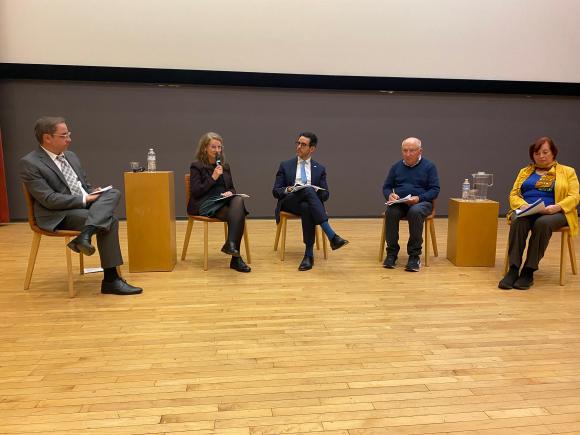
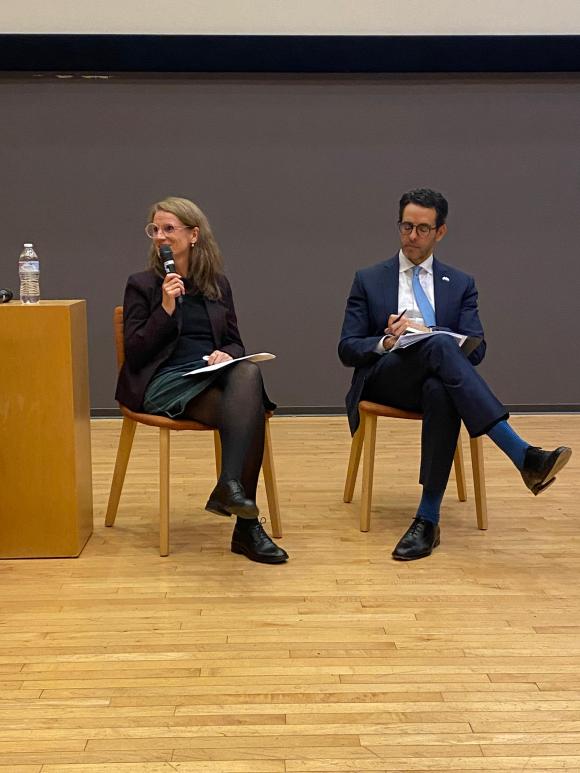
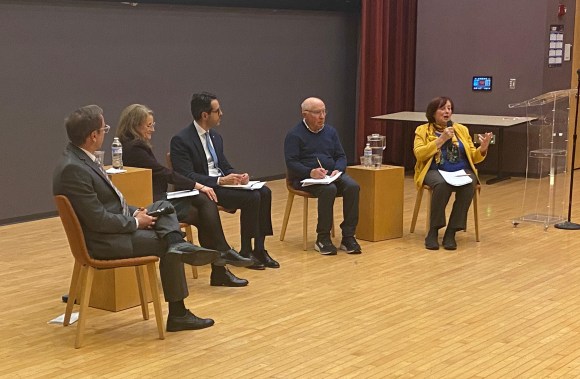
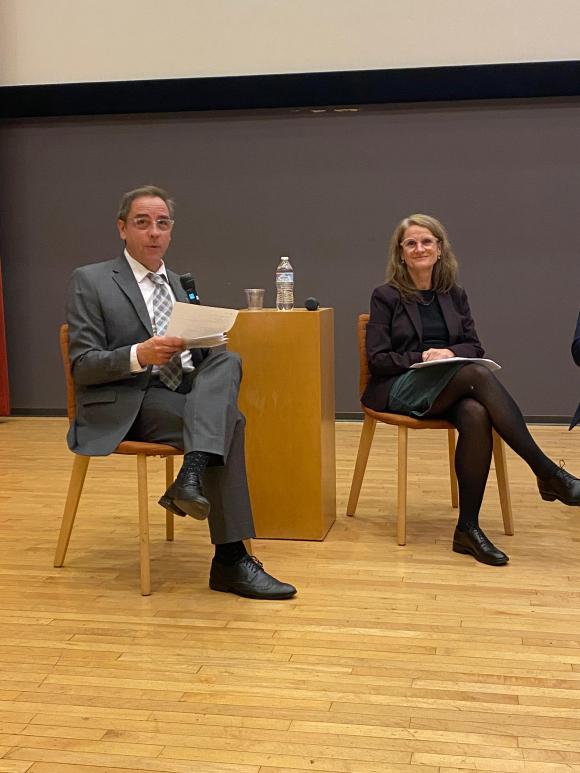
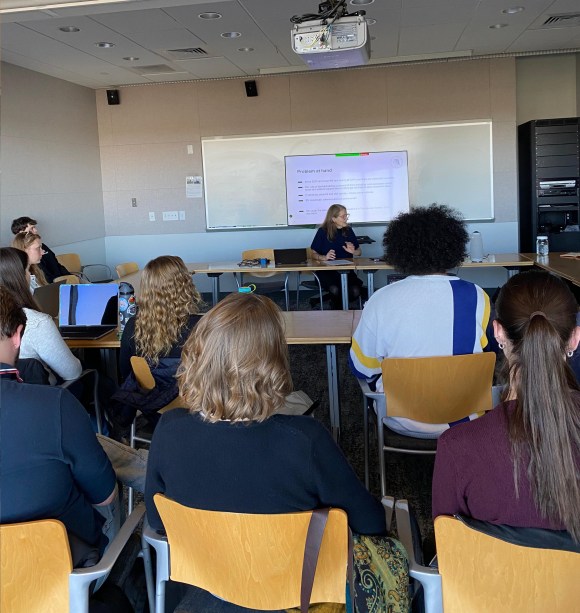
At the end of October our Director of Studies Claudia Matthes visited our TAM partner institution, the University of North Carolina at Chapel Hill!
Pierantonio D’Elia from the EU Delegation to the US (Competition and Justice Counsellor) opened the Jean Monnet Center for European Studies’ conference on “Challenges to Democracy and Democratic Governance in the EU” with a keynote. Together with Christiane Lemke (UNC Center for European Studies, Department of Political Science), and Konrad Jarausch (UNC Department of History), Claudia Matthes then took part in a panel discussion moderated by Holger Moroff (National Defense University). The contributions centered around the rise and impact of nationalist and populist contestations to democracy and democratic governance in Europe and discussed how peaceful and resilient societies could be further promoted. Claudia’s contribution dealt with the perspective of democratization in Central and Eastern Europe and the challenges of returning to democratic political practices in Poland.
The following day, Claudia was invited as a guest speaker to TAM’s Friday Lecture Series, where she gave a talk on “EU-Actorness towards Serbia and Georgia – how geopolitical and domestic foundations shape current enlargement strategies and responses to crises”.
Both activities provided a wonderful occasion to catch up with colleagues at UNC, and, especially, to meet the students from our TAM programme.
The 2025 Polish Presidential Election – What’s at Stake for Democracy in Europe?
21 May 2025
On May 21th 2025, an engaging and thought-provoking event was held in collaboration with Circle U. at Humboldt-Universität zu Berlin, titled “The 2025 Polish Presidential Election – What’s at Stake for Democracy in Europe?”
The event brought together a diverse group of participants, including scholars, students, journalists, and policy professionals, for a timely discussion on the political dynamics shaping Poland’s future and their broader implications for European democratic values.
With the recent presidential election in Poland as its starting point, the session explored key issues such as democratic backsliding, populism, political polarisation, and the role of civil society. The discussion emphasised the interconnectedness of national elections and EU-level democratic structures.
The atmosphere was intellectually stimulating, marked by rich contributions from both speakers and audience members. Participants left with deeper insights into the complexities of European democracy and the importance of cross-national dialogue in facing shared political challenges.
We thank Circle U. and all contributors for making this such a dynamic and meaningful exchange.
Participants
- Nina Witoszek, Professor, Centre for Development and the Environment, University of Oslo
- Claudia Matthes, Senior Lecturer of Political Science, Humboldt Universität zu Berlin (moderator)
- Kacper Szulecki, Research Professor in International Climate Governance, Norwegian Institute of International Affairs
- Elisa Parnefält Størksen, Student Leader, European Dialogue and Democracy Association
Annual Conference of the Working Group on European and Regionalism Studies (AKER) of the German Association for Political Science (DVPW)
15-16 May 2025
Event Link
In May 2025 I participated in the Annual Conference of the Working Group on European and Regionalism Studies (AKER) of the German Association for Political Science (DVPW).
Against the backdrop of massive internal and external challenges for the European Union and other regional organisations, we focused on the question of how regional organisations are changing in the face of systemic competition, growing multipolarity and war.
As part of the panel on ‘EU Enlargement and EU Internal Developments,’ I gave a keynote presentation on ‘EU Actorness under the New Commission – Shaped by Geopolitical and Domestic Policy Foundations of Current Enlargement Strategies’, followed by a fruitful discussion with my colleagues.
As always, I greatly value the exchange with my colleagues and am taking away many valuable insights!
Democratic Regression in Central Europe? Lecture at Akademie für politische Bildung Tutzingen
10 October 2024
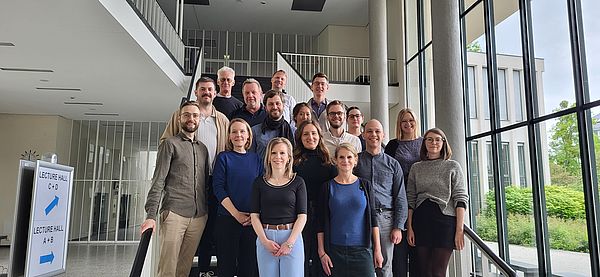
Claudia Matthes gave a lecture exploring the dynamics of democratic backsliding in Central Europe. As part of the Akademie für Politische Bildung Tutzing, the presentation focused on theoretical concepts of the rule of law and the rise of right-wing populism, providing a comparative overview of current political developments across Poland, Hungary, Slovakia, and the Czech Republic. Additionally, the session highlighted the role of the European Union in establishing shared standards and examined recent party realignments within the European Parliament. Together with Prof. Dr. Ireneusz Paweł Karolewski, Pavol Lacko, and Helena Truchlá, she concluded the academy with a panel discussion on the Future of the EU and transnational cooperation.

