Objectives
ShapingEU
The project addresses the reset of the EU’s enlargement policy since the full-scale Russian invasion to Ukraine. These developments have fundamentally changed the conditions of operation in Europe. Over the course of this military conflict, including its various impacts, the competition with China becomes more relevant as well. Hence, the EU redefining its position in its external relations to meet these challenges. It also increasingly focuses on its neighbourhood in the Western Balkans where China and Russia are making political and economic investments. The current move for further enlargement has implications for the internal set-up of the EU and its capacity to absorb new member states. Hence, both external and internal changes are on the table and the EU needs to address both issues properly in order to maintain its functionality and not to lose trust among the citizens of member and applicant states.
The Chair project ShapingEU therefore investigates the nature of these internal and external challenges and the responses provided so far by EU institutions. This is achieved by teaching students and by fostering the dialogue with non-academic partners and wider audiences. Especially the enlargement debate shows very precisely what the EU stands for and this has to be debated across Europe, with outside partners and beyond university structures. More specifically, the themes to be focused on include intra- and inter-institutional reforms, such as the decision-making procedures in the European Council, a different approach regarding the number of European Commissioners and a change of the operational modes of the European Parliament. They will all create dynamics for the co-decision process in law-making, i.e. it is necessary to look more closely into the discussion about the amendment of the Lisbon Treaty and the results of the Conference on the Future of Europe that ended in December 2022. The Chair project also seeks to understand how the changed methodology of enlargement for the Western Balkan region corresponds with the debates inside the EU and how this again influences the progress of enlargement after Ukraine and Moldova received candidate status in June 2022. The study of these issues allows to better assess the shape of the European Union. Various formats, such as simulations, case study research, public discussions and publications will enable students, experts and society to understand how the EU is engaging to address the changing conditions in Europe in a functional way and what gaps remain to be worked on. It is the objective of the Chair project to provide a more informed debate and by doing this to generate more trust in the EU’s capacity to act efficiently.
The objective of ShapingEU is to fill a knowledge gap on how EU enlargement and internal reforms are intertwined, especially in the field of rule of law, democratic procedures and fundamental rights. These issues stand out as major problems in some EU member states since the last enlargement round and are also contested issues in several applicant countries. At the same time, they form the character of a political and not only economic union.
Dr. Claudia-Y. Matthes
Dr. Claudia Matthes
Project Leader
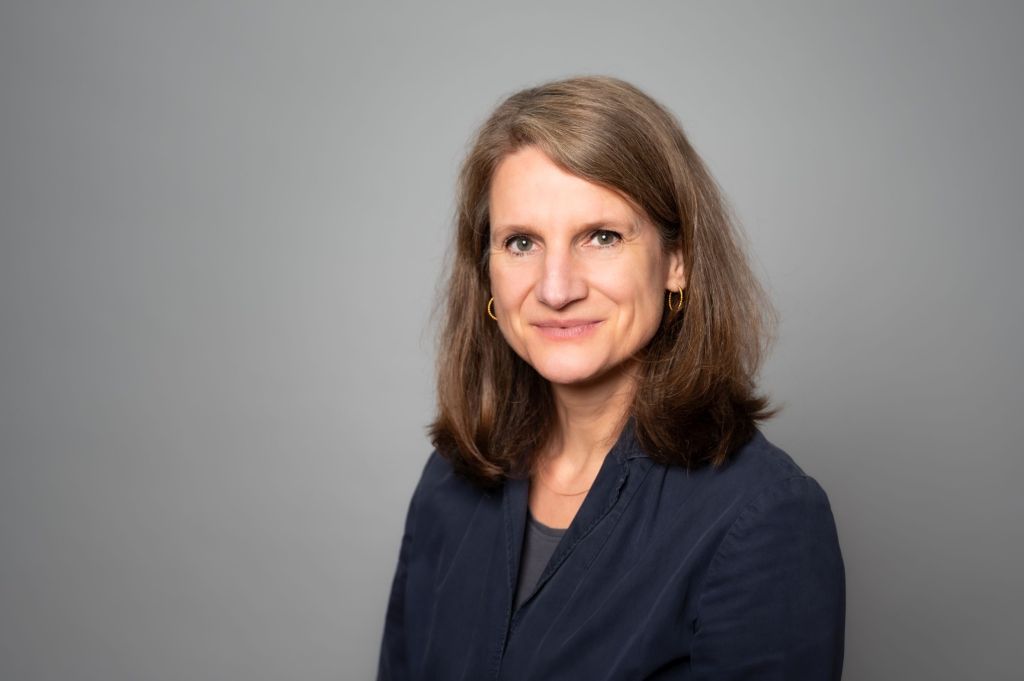
Claudia-Y. Matthes is Academic Director of the International Master’s Programmes at the Department of Social Sciences (ISW) and Senior Lecturer in Comparative Political Sciences and Political Systems of Eastern Europe since 2009.
Since 2021, she also serves as HU’s Academic Chair in the Democracy Hub within the Circle U. Alliance and led the Jean Monnet Module “Investigating EU Policies to foster the Rule of Law, (EU4LAW)”, funded by the Erasmus+ programme of the European Union, from 2020-2023. Since 2016, she acts as the ISW’s Erasmus Coordinator and teaches regularly at the Middle East Technical University in Ankara/Turkey and the University of North Carolina at Chapel Hill, among others.
Her research and teaching interests include European integration, comparative democracy studies, institutional and actor-centered approaches to political science, German domestic politics, politics of the past, and research design.
Previously, she worked as a research and academic manager, lecturer, and speechwriter.
 ShapingEU